Master Piano Sight-Reading: A 30-Day Guide Using Online Piano
Have you ever looked at a page of piano sheet music and felt completely overwhelmed by the sea of black dots and symbols? You are not alone. Many aspiring musicians feel that learning to read music is like learning a difficult foreign language. But what if you could bridge the gap between seeing a note and playing it instantly?
This ability is called sight-reading. It is the skill of reading and performing a piece of music for the first time without prior practice. While it sounds intimidating, it is a "muscle" that anyone can build. With just 30 minutes of daily practice over the next 30 days, you can transform from a complete beginner into someone who plays melodies with confidence.
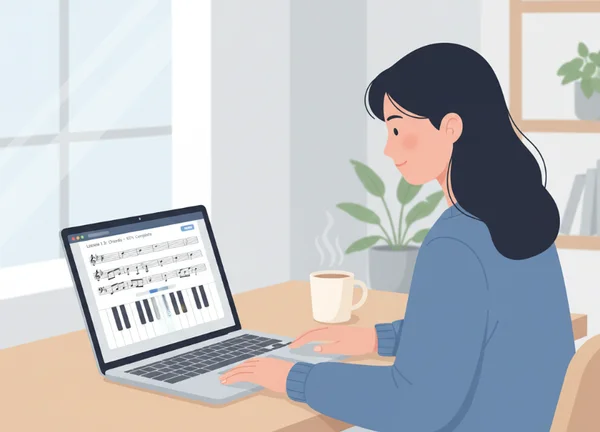
How can you start this journey without owning a grand piano? The answer lies in modern technology. By using a high-quality online piano, you can access all the tools you need directly in your browser. This guide will show you exactly how to use these digital tools to master sight-reading in just one month.
Understanding the Fundamentals of Piano Sight Reading
Before you press your first key, it is essential to understand what sight-reading actually is. Many people confuse it with simply "reading music," but there is a slight difference. Sight-reading is about speed, recognition, and the flow of the music. It is a vital skill for any pianist who wants to explore a wide variety of songs without spending weeks on a single page.
Defining Sight-Reading and Its Importance
Sight-reading is the ultimate shortcut in music education. When you develop this skill, the entire world of music opens up to you. You no longer need to rely solely on your memory or spend hours watching "falling note" videos. Instead, you can pick up any piece of sheet music and understand the "story" the composer is trying to tell.
For beginners, developing this skill early prevents the common habit of looking down at your hands constantly. It forces your eyes to stay on the page and your brain to map those visual cues to the keyboard. If you want to learn piano effectively, sight-reading is the foundation that supports everything else. This includes everything from classical masterpieces to modern pop hits.
The Three Pillars: Notes, Rhythm, and Expression
To read music, you must understand its three main pillars. First are the notes, which tell you which "pitch" or key to press. These are placed on a "staff" of five lines. Second is the rhythm, which tells you how long to hold each note. Rhythm is the heartbeat of the song. Without it, music is just a series of random sounds.
Finally, there is expression. These are the small markings that tell you to play loudly, softly, or smoothly. When you use a virtual piano, you can often see these elements displayed clearly alongside the keys. Mastering these three elements together allows you to turn static ink on a page into a living, breathing performance.
Overcoming Early Obstacles
The most common hurdle for beginners is "visual overload." Your brain tries to process the note name, the finger number, and the rhythm all at once. This often leads to "stuttering" in your playing. Another challenge is the urge to look at your fingers to make sure they are on the right keys.
To overcome this, you need a controlled environment. Beginners often struggle by attempting pieces that are too difficult too soon. The secret to success is starting with very simple patterns. By using an interactive tool that displays both sheet music and keyboard on the same screen, you can reduce mental strain and build confidence faster.
Your First 10 Days: Building a Solid Foundation
The first ten days are about "keyboard geography." You need to learn exactly where every note lives on the piano without having to count from middle C every time. This phase is all about repetition. It focuses on building a mental map of the 88 keys or the common digital layouts.
Days 1-3: Note Recognition
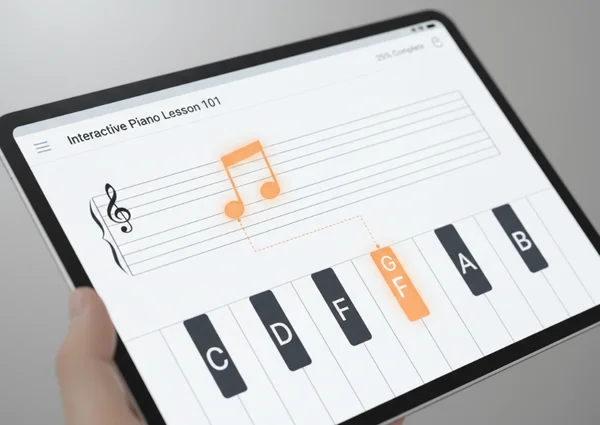
During the first three days, focus entirely on identifying notes. Look at a note on the staff and find its home on the piano. Do not worry about playing a full song yet. Just focus on the "white keys" first. Learn to recognize C, D, E, F, G, A, and B instantly.
A great trick is to use a virtual keyboard that allows you to toggle "Note Names" on and off. Start with the names visible to build the association. Once you feel comfortable, turn them off and test yourself. This "hide and seek" method is one of the fastest ways to memorize the keyboard layout.
Days 4-7: Rhythm and Time Signatures
Once you know where the notes are, you need to know when to play them. Days 4 through 7 should be dedicated to whole notes, half notes, and quarter notes. Think of music like a clock. A quarter note is one "tick," while a whole note lasts for four "ticks."
Practice "clapping" the rhythm of a simple piece before you try to play it. This separates the physical act of pressing keys from the mental act of keeping time. Many online tools include a built-in metronome. Always use a metronome during these days to ensure your internal clock is accurate. Consistency is more important than speed during this week.
Days 8-10: First Melodies
Now it is time to put it all together. For the final days of your first update, try playing very short, three-note or five-note melodies. This is where the unique features of a modern platform really shine. You do not need to go buy a physical book of sheet music to start practicing.
You can simply practice piano by using integrated sheet music features. Look for the "Score" or "Sheet Music" button on the interface. This will display a simple piece right next to the keys. Try to play the melody slowly. Keep your eyes on the digital score rather than your mouse or your fingers.
Days 11-20: Expanding Your Musical Vocabulary
In the second stage of your 30-day journey, we move from single notes to groups of notes. Music is rarely just one note at a time. It is built on patterns called scales and chords. Recognizing these patterns is the "secret sauce" of expert sight-readers.
Master Scales and Chords
Think of scales as the "alphabet" of music. Most songs are written in a specific "key," which is just a specific scale. If you know the C Major scale, your brain will automatically expect certain notes. During Days 11-15, practice playing the C Major and G Major scales while looking at their notation on the screen.
Next, introduce basic chords. A chord is simply three notes played at the same time. Instead of reading three individual dots, you will start to see a "shape." When you recognize the shape of a C Major chord, your hand will move into position automatically. This "shape recognition" is what allows advanced pianists to read complex music so quickly.
Dynamics and Rhythmic Complexity
Now that your hands are moving more freely, it is time to add some "flavor" to your music. Days 16-18 should focus on eighth notes and rests. Silence is just as important as sound in music. Practice pieces that have "stops and starts" to improve your rhythmic precision.
You should also start practicing "Dynamics." This is the technical term for volume. In sheet music, "p" means piano (soft) and "f" means forte (loud). Try to play your scales softly and then loudly. This teaches your brain to read instructions beyond just the pitch and the rhythm. It makes your sight-reading sound more professional.
Using Recording Tools for Feedback
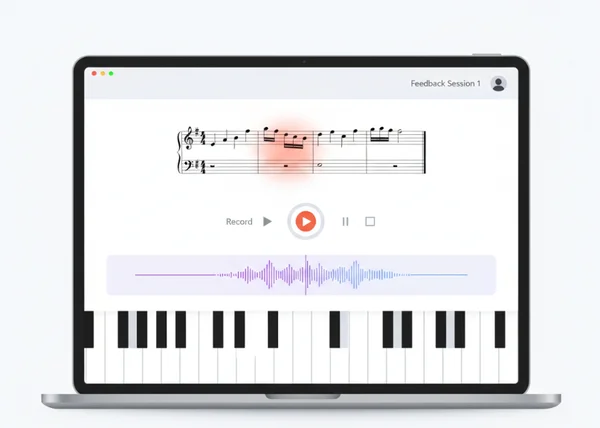
One of the best ways to improve is to listen to yourself. Sometimes, when we are playing, we do not notice our own mistakes. This is where a recording tool becomes your best teacher. During Days 19 and 20, record yourself playing a simple melody.
Listen back to the audio file. Did you miss a note? Was your rhythm steady? Using the "Audio Recorder" feature on the site allows you to download your performance as an MP3. By comparing your recording to the original sheet music, you can pinpoint exactly where your sight-reading needs more work. This self-feedback loop is essential for rapid growth.
Days 21-30: Reading and Playing with Confidence
You are in the home stretch! The final ten days are about "fluency." This means playing without stopping, even if you make a mistake. In a real performance, the music keeps going. Your eyes must stay ahead of your hands.
Coordinating Multiple Voices
Until now, you have mostly focused on the right hand. In the final stage, we introduce the left hand. Reading two lines of music at once is the ultimate challenge for a pianist. Start with pieces where the left hand just holds one long note while the right hand plays the melody.
This is called "multiple voices." It requires your brain to split its attention. Don't get discouraged if it feels difficult at first. Use the lesson mode on your online tool to slow down the playback speed. By practicing at 50% speed, you give your brain enough time to process both the treble clef and the bass clef simultaneously.
Speed and Accuracy Drills
During Days 25-28, focus on "speed bursts." Take a measure of music that you find easy and try to play it slightly faster each time. However, never sacrifice accuracy for speed. If you start making mistakes, slow back down immediately.
A great exercise is "The Look Ahead." While your hands are playing measure one, your eyes should already be looking at measure two. This creates a "buffer" in your brain. It ensures that you never have to pause between lines. This advanced technique is the hallmark of a confident sight-reader.
Developing Your Permanent Routine
By Day 30, you will have the skills to read basic melodies and understand rhythm. But the journey does not end here. To keep these skills sharp, you need a routine. Spend 10 minutes on scales, 10 minutes on a "challenge piece," and 10 minutes just exploring new music.
The beauty of a digital platform is its constant availability. You can start playing whenever you have a few minutes of free time. Whether you're on a lunch break or traveling, you can keep your sight-reading skills sharp without needing a physical instrument.
Your Sight-Reading Journey Continues
Congratulations on completing your 30-day sight-reading journey! You've made impressive progress—transforming those intimidating musical symbols into beautiful melodies. With consistent practice using our online piano tools, you've built the foundation to explore countless musical pieces.
Remember, the goal of sight-reading is not perfection on the first try. It is about the joy of discovery. By using the integrated sheet music, recording features, and interactive keyboard on our platform, you have all the tools necessary to become the pianist you’ve always wanted to be. Are you ready to see how far you’ve come? Load up a new piece of music and start your next practice session. The world of music is waiting for you to play it.
Frequently Asked Questions
How long does it really take to become proficient at sight reading?
Proficiency depends on your goals. Most students can learn to read simple melodies and basic rhythms within 30 to 60 days of consistent practice. However, becoming an "expert" who plays complex classical pieces at first sight often takes years. The key is to practice piano every day to keep the visual-to-physical connection strong.
Can I learn to sight read piano without a teacher?
Yes, you can! While a teacher provides valuable feedback, modern digital tools can fill many of the gaps. Features like "Lesson Mode," "Note Labels," and "Audio Recording" allow you to self-correct. By using tools that provide immediate visual feedback, you can teach yourself the fundamentals of notation and keyboard geography at your own pace.
What's the best daily practice routine for improving sight reading skills?
A balanced 30-minute routine is most effective. Spend 5 minutes on note recognition and 10 minutes on rhythm drills with a metronome. Spend the final 15 minutes on "Fresh Sight Reading." In the last part, always try to play something you have never seen before. You can find many simple songs to practice on our virtual piano homepage.
How does the sheet music feature help with sight reading practice?
Our platform bridges the gap between the page and the key. Instead of looking back and forth between a physical book and a screen, our "Score" feature puts the music in your line of sight. This helps you build spatial awareness. You learn to feel the distance between keys while your eyes stay fixed on the notes. This is the most efficient way to develop your skills in a digital environment.